Research project · Sport science

Fit for duty.
Progress you can measure.

Physical fitness, health and training of firefighters: a job-specific training program, a practical field test battery and an intervention study with a professional fire department.

The program at a glance

8
job-specific exercises in a circuit that train the whole body in a balanced way
8–18min
main part, little equipment needed

Pilot feedback

17 firefighters

4.7/ 5
would recommend it to other firefighters
4.5/ 5
relevance to their work

Why firefighter fitness?

Emergency operations demand endurance, strength, speed, coordination and agility – often with breathing apparatus and in full protective gear. Yet there are still few standardized training programs and uniform fitness tests; both are often left to individual departments.

01 · Demands

Firefighting demands peak performance

Internationally, overexertion is considered the leading cause of on-duty deaths and of musculoskeletal injuries.

02 · Health

Fitness cannot be taken for granted

Studies show insufficient fitness, overweight and cardiovascular risk factors in many firefighters; back pain is common.

03 · Practice

A lack of common standards

The aim of the project: evidence-based training and time-efficient testing that work in the daily routine of a fire station.

Project structure

1Published

Job demands & training program

A literature-based profile of operational demands and a High-Intensity Functional Training (HIFT) program for firefighters.

Strength & Conditioning Journal, 2022

2Published

2aPilot: acceptance of HIFT

17 firefighters rated the program as highly relevant to their work and would recommend it.

Sports, Medicine & Health Summit, 2021

2bPilot: low-threshold training

In progress

Low-threshold preparatory training for less fit firefighters, tested in a pilot study with new recruits of the Göttingen professional fire department (“Fit fürs Feuer”).

Manuscript in preparation

3Published

3aTesting: scoping review

Comparison of field tests of cardiorespiratory fitness; the 20 m shuttle run emerges as the most practical valid option for testing entire fire stations.

Ergonomics, 2026

3bConcept: field test battery

In progress

A practical field test battery that can be completed at the fire station in a short time and, beyond endurance, assesses further job-relevant abilities such as balance, strength, power and muscular endurance. The endurance test is based on the review.

Manuscript in preparation

4Planned for 2027

Intervention study with a professional fire department

Does the HIFT program improve physical performance? Measured with the field test battery from step 3b.

Cooperation with a professional fire department · in planning

The training program

Every exercise is linked to a firefighting task

Two circuits (A and B), each with eight functional exercises performed as intervals: together they target all major muscle groups and provide variety. Short, intense, requiring little equipment and scalable to any fitness level.

Level 1 · EntryManuscript in preparation

Low-threshold preparatory training

For firefighters with low fitness or returning after a break: a gentle re-entry that leads up to HIFT. Without time pressure, preparatory movement patterns and whole-body exercises are taught with an emphasis on correct technique – to improve safety and prevent injuries. Tested in the project “Fit fürs Feuer” with new recruits of the Göttingen professional fire department.

Level 2 · Main programPublished

HIFT circuit for firefighters

The core of the project: High-Intensity Functional Training that addresses several job-relevant abilities in one session – aerobic and anaerobic capacity, strength and muscular endurance. The exercises mimic the muscular demands of typical firefighting tasks, from stair climbing to forcible entry.

Shown: circuit A. Circuit B varies the exercises, e.g. lat pull-down instead of rows or push-ups instead of overhead press.

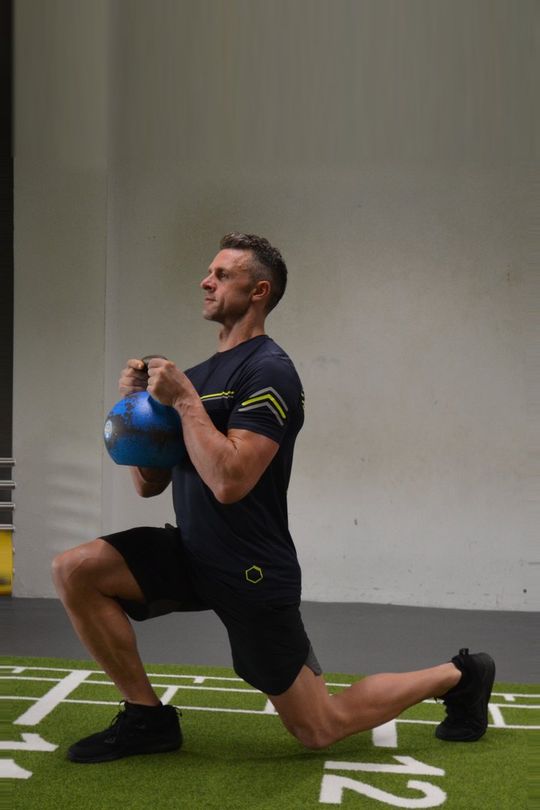
Front lunge
Front lunge
→ Terrain, stairs, carrying
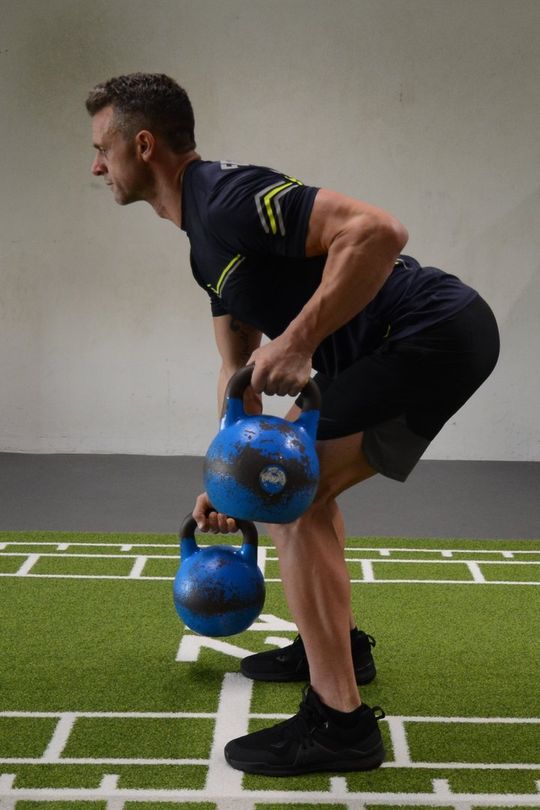
Rows
Rows
→ Hoisting and pulling
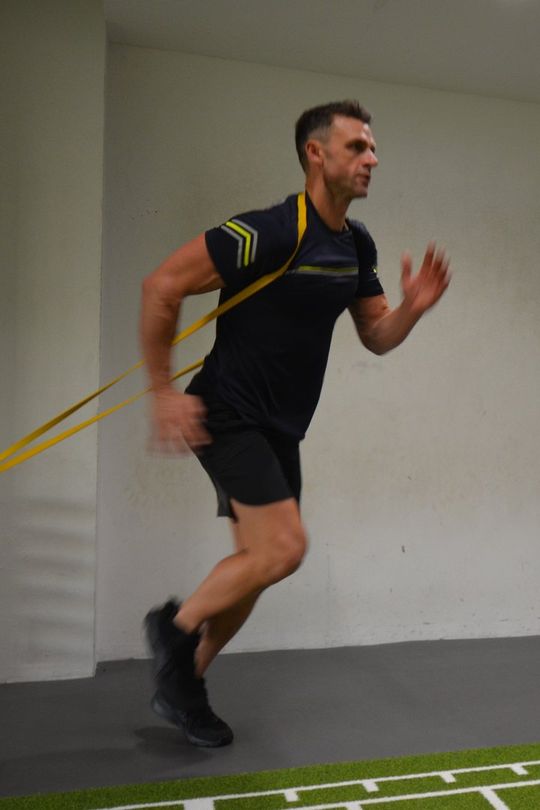
Resisted sprint
Resisted sprint
→ Hose advance, terrain
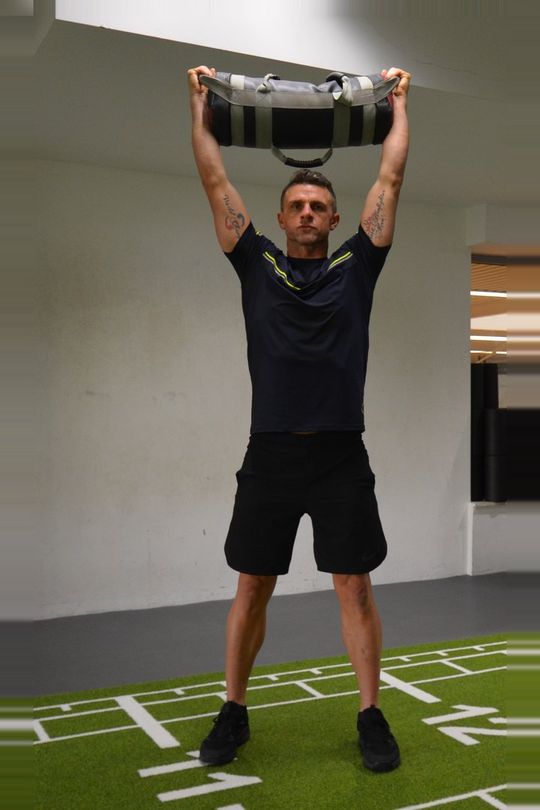
Overhead press
Overhead press
→ Ceiling breach, ladder raise
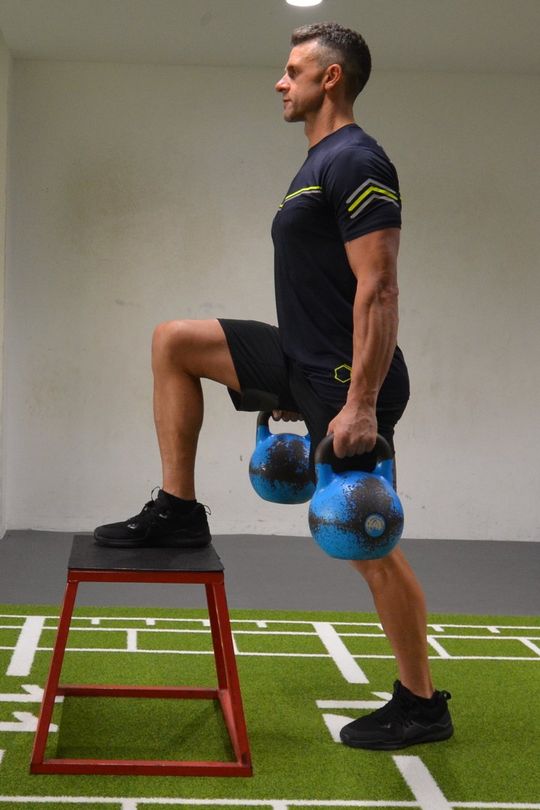
Step-ups
Step-ups
→ Stair climbing
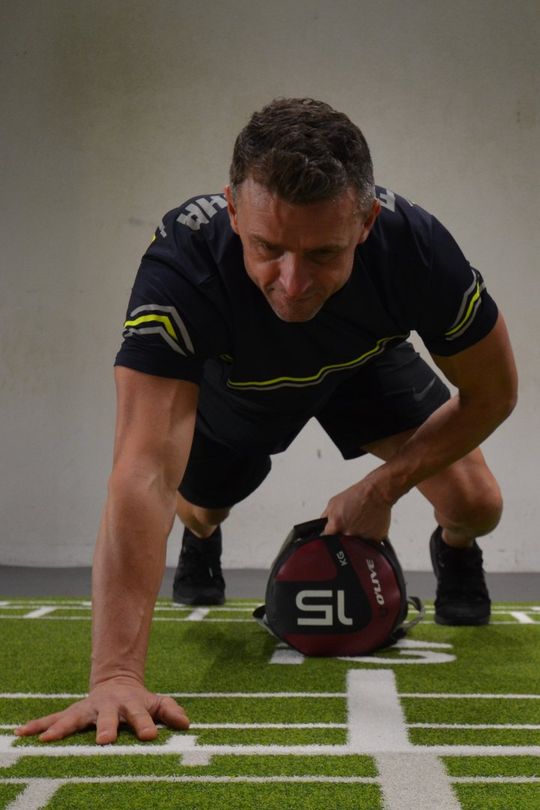
Bear crawl with sandbag pull
→ Moving through difficult terrain
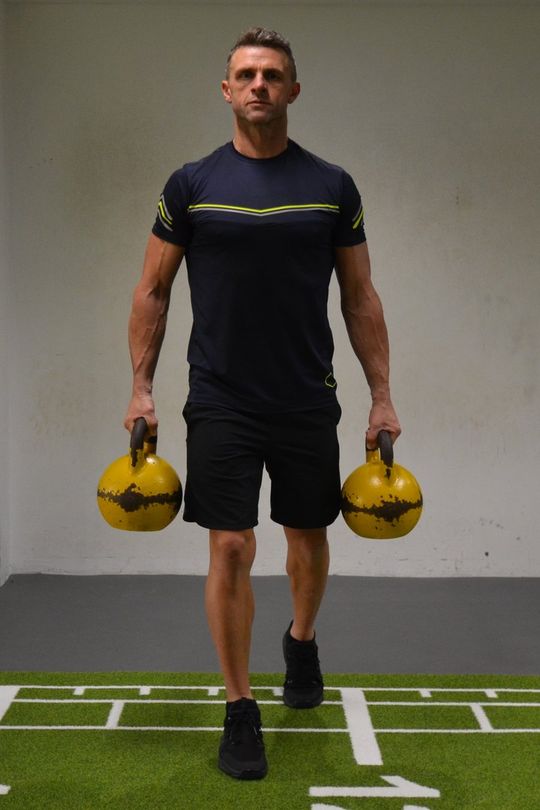
Farmer’s walk
Farmer’s walk
→ Carrying, victim rescue
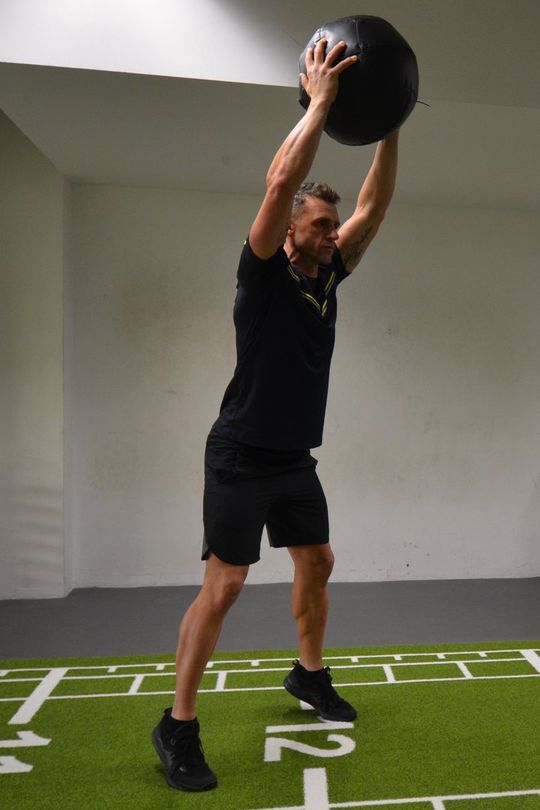
Slams
Slams
→ Forcible entry, demolition

Exercise model: Joachim Posanz

Adapted with permission from Wolters Kluwer Health, LLC: Sempf F, Thienes G. High-Intensity Functional Training for Firefighters. Strength and Conditioning Journal 44(2): 97–105, 2022. © National Strength and Conditioning Association. https://doi.org/10.1519/SSC.0000000000000659

20:10 s
or 30:15 s work : rest
2–3 rounds
of 8 exercises, active rest in between
8–18 min
main part; full session 35–60 min
1–2× / week
off duty

Next step · 2027

The intervention study

Together with a professional fire department, we will examine how the HIFT program affects the physical performance of firefighters.

  1. 1
    Baseline testing
    Field test battery from step 3b, carried out directly at the fire station.
  2. 2
    Training phase
    First 4 weeks of low-threshold training as preparation, then HIFT once or twice a week for 6–8 weeks (shorter if agreed with the department), supervised and scaled.
  3. 3
    Final testing & analysis
    Pre/post comparison; results are shared with participants and the fire station.

What’s in it for the fire department

  • a tested training concept that needs little equipment
  • a fitness profile for every participating firefighter
  • a testing routine that fits into the daily routine of a fire station
  • a results report and presentation on request

Findings to date

Publications & contributions

From the project

2026
Review

Field-based tests for cardiorespiratory fitness monitoring in firefighters: a scoping review and comparative appraisal

Sempf, F., Jaitner, T. & Thienes, G. · Ergonomics · Open Access

Appraises field tests for specificity, validity, reliability, safety and feasibility. Recommendation: 20 m shuttle run for station-wide testing, every six months as a starting point.

2022
Article

High-Intensity Functional Training for Firefighters

Sempf, F. & Thienes, G. · Strength and Conditioning Journal, 44(2), 97–105

Rationale and complete protocol of the HIFT circuit, including mobility work, specific warm-up and progression.

2021
Poster

Evaluation of a High Intensity Functional Training Protocol for Firefighters

Sempf, F. & Thienes, G. · Sports, Medicine and Health Summit 2021 · Dtsch Z Sportmed, 72

Pilot with 17 firefighters: satisfaction 4.7, relevance to work 4.5 and comprehensibility 4.8 out of 5.

Photos: © NSCA, adapted with permission from Wolters Kluwer Health, LLC (see credit in the training section).

Further contributions

Related to the project: studies at the Toughest Firefighter Alive, a competition with job-specific tasks, and on balance in professional firefighters.

2023
Poster

Verletzungen und Beschwerden bei Teilnehmenden des Toughest Firefighter Alive Wettkampfes [Injuries and complaints among participants of the Toughest Firefighter Alive competition]

Sempf, F. & Thienes, G. · Sports, Medicine and Health Summit 2023

71 injuries in the preceding twelve months among 69 competitors; ligament and muscle injuries were most common, the knee was most frequently affected. Few injuries during the competition itself.

2023
Poster

Modified Star Excursion Balance Test Scores of Firefighters

Sempf, F. & Thienes, G. · Sports, Medicine and Health Summit 2023

Firefighter-specific reference values for the mSEBT in 49 professional firefighters. Notable: lower anterior reach and a side-to-side asymmetry of at least 10% in 36.7%. Balance tests are therefore recommended for fire departments.

2021
Poster

Belastungsprofil von TeilnehmerInnen des Toughest Firefighter Alive Wettkampfes [Physiological load profile of participants of the Toughest Firefighter Alive competition]

Sempf, F. & Thienes, G. · Sports, Medicine and Health Summit 2021 · Dtsch Z Sportmed, 72

Heart rate and blood lactate in 39 participants of the 2018 open TFA European Championship were consistently in the “very hard” intensity range. The values show what is possible in job-specific tasks under maximal competitive exertion.

All publications, including those outside the firefighting context: Profile on ResearchGate ↗

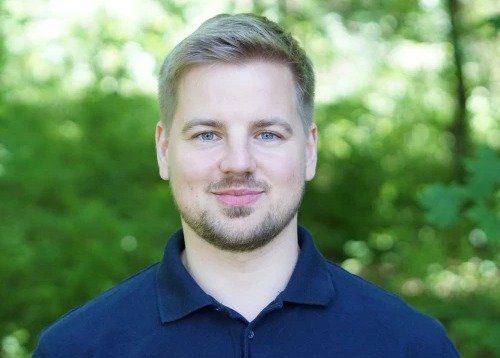
Portrait Felix Sempf

About me

Felix Sempf, M.A.

Sport scientist specializing in rehabilitation and prevention. He has been working on firefighter fitness since 2014, when he led the project “Fit fürs Feuer” at the Göttingen professional fire department.

  • –PhD candidate, University of Vechta (previously University of Göttingen)
  • –Head of sports therapy, Fachklinik F42, Berlin
  • –Lecturer, Department of Sport Science, Humboldt-Universität zu Berlin
Supervision
Prof. Dr. Gerd Thienes
Training and Movement Science, University of Vechta
University of Vechta logo
Prof. Dr. Thomas Jaitner
Training and Movement Science, Institute of Sport and Sport Science, TU Dortmund University
TU Dortmund University logo

Education

  • M.A. Sport Science
    Focus on rehabilitation and prevention · University of Göttingen
  • B.A. Sport Science & Economics
    Two-subject bachelor · University of Göttingen
  • Study abroad, Bachelor of Exercise Science
    Griffith University, Gold Coast, Australia

Experience

  • Project lead “Fit fürs Feuer”
    Göttingen professional fire department · 2014
  • Lecturer (teaching-focused position)
    Institute of Sport Science, Göttingen · 2018–2019
  • Research associate
    Institute of Sport Science, Göttingen · 2016–2018
  • Lecturer
    Institute of Sport Science, Göttingen · 2012–2016
  • Strength & conditioning coach, youth basketball national league
    BBT Göttingen 2013–2017 · Veilchen Girls 2017–2018
  • External expert “Fit im Forst”
    Lower Saxony forestry offices · 2013
  • Prevention courses
    Cooperation partner of Techniker Krankenkasse (health insurer) · 2014–2017
  • Coach
    University sports fitness center Göttingen 2007–2016 · Lindfield FC, Sydney 2010

Qualifications (selection)

  • C-level coaching license, competitive weightlifting
    DOSB
  • Barbell license
    BVDG
  • Russian Kettlebell Challenge
  • C-level coaching license, football (soccer)
    NFV
  • Qigong and yoga instructor

Interested in the study?

Fire stations, officers and fitness coordinators are welcome to get in touch directly – for questions, an initial conversation or an on-site presentation.

felix.sempf@mail.uni-vechta.de
